Description
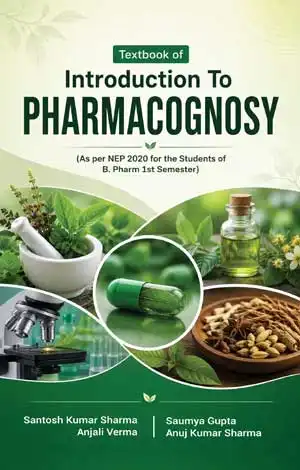
Textbook of Introduction To Pharmacognosy is a comprehensive academic resource designed for B. Pharm first-semester students, aligned with the Pharmacy Council of India curriculum and NEP 2020. It builds a clear foundation in pharmacognosy while connecting traditional knowledge of natural medicines with contemporary pharmaceutical science.
The book introduces the history, definition, scope, and development of pharmacognosy, then explores natural drug sources including plants, animals, microorganisms, marine organisms, minerals, and plant tissue culture. It explains landmark natural-product contributions to medicine, with examples such as morphine, quinine, aspirin, warfarin, penicillin, cephalosporins, taxol, and artemisinin.
A strong practical focus covers medicinal-plant cultivation, collection, processing, storage, Good Agricultural and Collection Practices, conservation, and sustainable utilization. The text also addresses quality control of natural drugs, adulteration, organoleptic and microscopic evaluation, physicochemical parameters, chemical and biological assessment, and DNA barcoding.
Students are introduced to primary and secondary plant metabolites—including alkaloids, glycosides, flavonoids, tannins, terpenoids, volatile oils, and resins—along with traditional systems such as AYUSH and Traditional Chinese Medicine. The final section profiles important phytotherapeutic agents across therapeutic categories including adaptogens, hepatoprotectives, cardiovascular and antidiabetic drugs, anti-inflammatory agents, CNS medicines, antimicrobials, gastrointestinal remedies, dermatological agents, women’s health, and respiratory care.
With coverage spanning biotechnology, herbal medicines, quality assurance, drug discovery, and eco-pharmacognosy, this textbook is a useful study companion for pharmacy students seeking a structured understanding of natural drugs and their pharmaceutical applications.