
Description
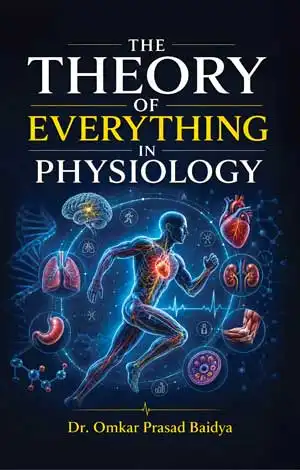
The Theory of Everything in Physiology by Dr. Omkar Prasad Baidya presents an ambitious framework for understanding the human body as an interconnected physiological system. Rather than examining organs and systems in isolation, the book explores how cardiovascular, nervous, respiratory, renal, endocrine, gastrointestinal, immune, reproductive, metabolic, skeletal, and other physiological processes influence one another.
At the heart of the book is a proposed mathematical approach to unified physiology. The author brings together physiological parameters and relationships in an effort to model how coordinated systems contribute to stability and normal function. Homeostasis receives particular attention, illustrating how mechanisms involving the heart, kidneys, blood vessels, nervous system, endocrine system, and other components can collectively respond to physiological changes.
The discussion extends beyond conventional physiological systems to include special senses, ageing, gene expression, chemical kinetics, cognitive function, and human consciousness. The author then explores connections between physiological processes and concepts from physics, including electromagnetism, gravity, quantum mechanics, and the nuclear forces.
Designed as a conceptual and research-oriented work rather than a standard physiology textbook, this book may appeal to researchers, scientific thinkers, students of interdisciplinary science, and readers interested in mathematical models of complex biological systems. It offers a provocative perspective on how physiology might be viewed through a broader unifying framework.